
Introduction
Starting March 6, 2025, the Ministry of Tourism implemented an important update to the categorization of cities on the Brazilian Tourism Map. This change introduces new criteria for classifying municipalities according to their tourism potential, an advancement that promises to improve how tourist destinations are monitored and supported.
Until now, cities were classified into categories A, B, C, D, and E, based on tourism volume and infrastructure. However, with the update, Brazil adopts three new categories, more aligned with the specific characteristics and needs of each city. These are:
- Tourist Municipalities: Those that concentrate the largest flows of visitors and that possess the main tourist attractions and services.
- Municipalities with Complementary Tourism Offerings: Municipalities that offer attractions and services that complement the region's offerings, contributing to a better flow of tourists throughout the area.
- Municipalities Supporting Tourism: Cities that, while not having a large tourist flow, provide services or products that assist neighboring tourist destinations.
This new structure aims to meet the guidelines of the New General Tourism Law and of National Tourism Plan 2024-2027, which aims to promote the sustainable and strategic development of the sector in the coming years.
Participation Criteria and Benefits
To be included on the Tourism Map, the municipality must meet the criteria established by the Ministry of Tourism:
- To have a tourism office or department;
- Having a specific Budget Law;
- Having tourism service providers registered with CADASTUR;
- Maintain an active Municipal Tourism Council;
- Sign a commitment agreement;
- Fill in the tourist activities tab in the system.
Participation in the Map is important because the data collected will help guide public policies and the allocation of federal funds to tourist municipalities.
Furthermore, the new National Tourism Plan It sets ambitious goals for the sector. Among them, it highlights the increase in the number of domestic tourists from 93 million to 150 million and the goal of reaching 10 million international tourists by 2027, in addition to generating more than 3 million formal jobs in Brazilian tourism.
Data on the Tourism Map:
In Brazil:
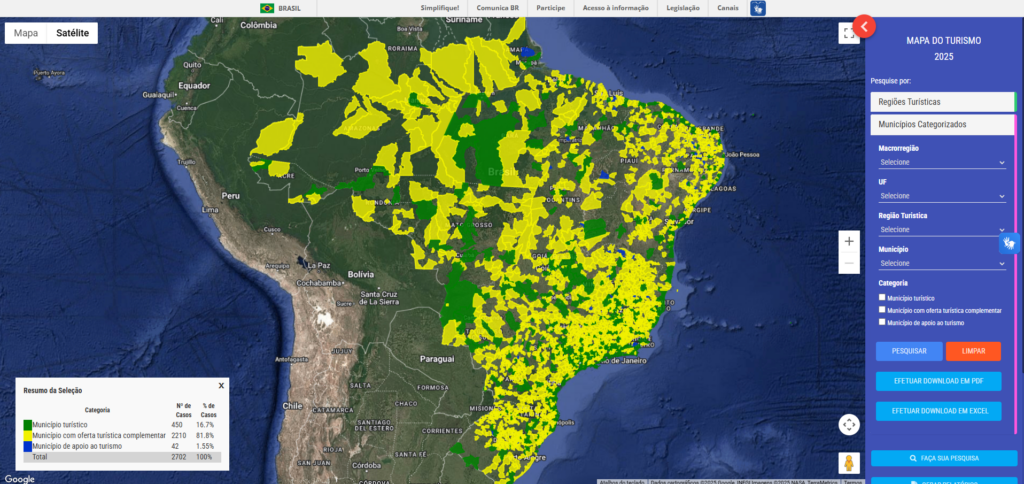
- Tourist Municipalities: 450 (16.7%)
- Municipalities with Complementary Tourism Offer: 2210 (81.9%)
- Municipalities Supporting Tourism: 42 (1,55%)
- Total number of municipalities: 2702
In Santa Catarina:
- Tourist Municipalities: 33 (20,2%)
- Municipalities with Complementary Tourism Offer: 130 (79.8%)
- Municipalities Supporting Tourism: 0
- Total number of municipalities: 163
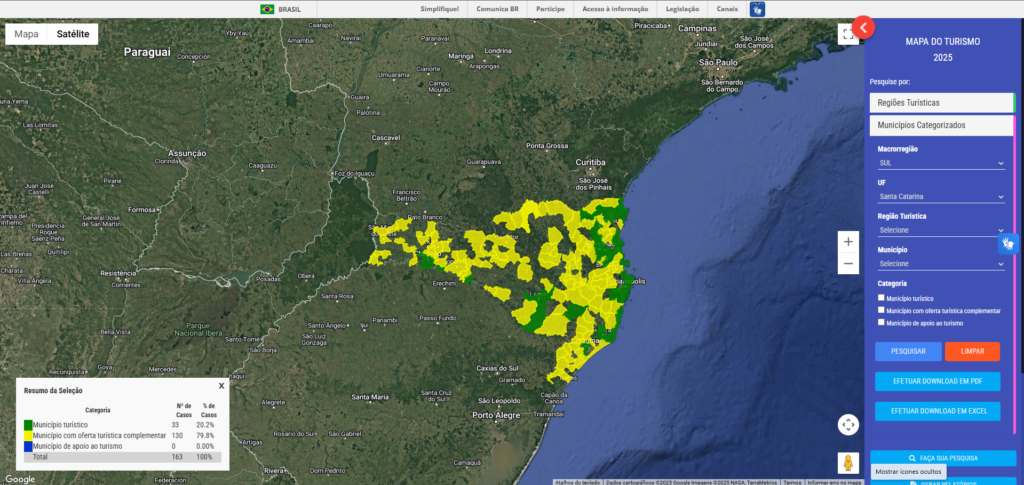
This data demonstrates the tourism potential of Santa Catarina and Brazil as a whole. The change in categorization will help strengthen destinations, guiding more effective public policies and supporting the development of each region according to its capacity and vocation.
The Vision for the Future
The new National Tourism Plan, which includes this update to the Map, aims to position Brazil as... “"An unparalleled destination, safe, inclusive, sustainable, innovative and a benchmark for unique and memorable experiences"” Until 2027. This is the ideal time for municipal managers to align themselves with this new strategy, taking advantage of government support and guidelines to boost tourism and create opportunities for the population.
With these changes, each municipality will have a fairer classification that better reflects its reality, allowing for more precise targeting of investments and actions necessary for the sector's growth.
Conclusion
Tourism managers from Santa Catarina and throughout Brazil, pay attention to these updates in the Tourism Map. The new categories are an excellent opportunity to strengthen the position of municipalities in the tourism sector, promoting more sustainable and balanced development, while maximizing the potential of each destination.