
If you work in public tourism management, you've probably heard of Municipal Tourism Councils—the so-called COMTURs. Perhaps you already participate in one, have tried to activate it, or are still trying to understand exactly what role this body plays in the structure of local tourism.
With the publication of Ministry of Tourism Ordinance No. 1, of January 30, 2026, The Municipal Tourism Council has ceased to be merely a good management practice and has become a... mandatory requirement so that the municipality can be included in the Brazilian Tourism Map.
In this article, we explain what these councils are, how they work, what they do, and how they fit into this new regulatory landscape.
What is a Municipal Tourism Council?
The Municipal Tourism Council is a a collegiate body of a consultative and/or deliberative nature, established by municipal law, with the function of contributing to the formulation, monitoring and control of public tourism policies at the local level.

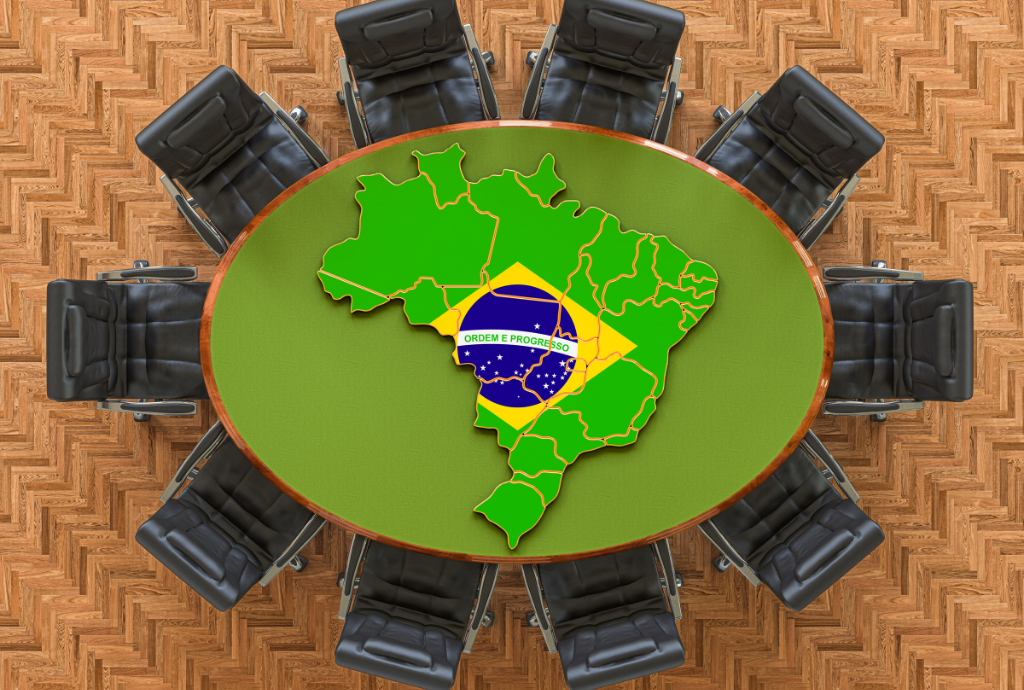
In simpler terms: it's the space where different tourism stakeholders sit at the same table — public authorities, the tourism industry, civil society, the community — to discuss, propose, and monitor the development of tourism in the municipality.
It is not a government body, but it works alongside it. It does not have direct executive power, but it plays a fundamental role in planning and oversight.
Who makes up a Municipal Tourism Council?
The composition varies according to the municipal law that establishes the council, but the recommendation is that it be... tripartite, That is, with representatives from three segments:
Public authorities — municipal departments of tourism, culture, environment, infrastructure, among others, as well as state agencies when relevant.
Private sector (tourism industry) — accommodation providers, travel agencies, restaurants, tour guides, transportation companies, entertainment and leisure companies, among other tourism service providers.
Civil society — local communities, residents' associations, cultural entities, non-governmental organizations, universities, unions and other representatives of the population.
This tripartite composition is essential so that the council is not just an arm of the city hall, but a genuine space for participation and social control.
How does it work in practice?
COMTUR operates through periodic meetings — usually monthly or bimonthly — where the agendas are discussed and the decisions are recorded in minutes.
For it to function regularly, the council needs to have:
Regulatory act of creation — usually a municipal law or decree that formally establishes it, defines its composition, its responsibilities, and its internal regulations.
Elected board — with a president, vice-president, and other members duly sworn in, with a defined term of office.
Work plan — a document that establishes the actions, goals, and activities planned for the management period, aimed at developing tourism in the municipality.
Active and documented meetings — with minutes that record the discussions and decisions made.
Without these elements, the council exists only on paper. And that's precisely where many municipalities encounter difficulties.
What does a Municipal Tourism Council do?
The responsibilities of a COMTUR (Municipal Tourism Council) are broad and strategic. Ordinance MTur No. 1/2026 details, in its Annex III, the responsibilities of the Municipal Tourism Councils within the scope of the Tourism Regionalization Program. Among them are:
Collaborate in Development, updating, and monitoring of the Municipal Tourism Plan., integrating local actions with state and national guidelines.
Support the inclusion and continued presence of the municipality on the Brazilian Tourism Map, ensuring that regulatory requirements are met.
Encourage participation involving different sectors of society in the development of local tourism, promoting collaboration between public authorities, the tourism industry, the community, and the third sector.
Suggest and monitor projects tourism infrastructure, professional training, itinerary creation and strengthening of attractions.
To promote sustainable, inclusive and accessible tourism., defending the historical, cultural and natural heritage of the municipality.
To track, monitor and oversee The application of financial resources allocated to tourism — such as funds from agreements, municipal funds, and own revenues — ensuring transparency and social control of public policies.
Evaluate the results of tourism programs and projects, contributing to the continuous improvement of management.
In other words, the council is the institutional guardian of tourism in the municipality. It is not a passive body. When active and engaged, it influences decisions, accesses resources, and ensures that tourism is treated as a long-term public policy—and not just as a government project.

What changed with MTur Ordinance No. 1/2026?
The new ordinance from the Ministry of Tourism has brought important changes to how councils are treated in the tourism mapping process. What was previously recommended is now required—and with more detailed criteria.
For a municipality to integrate or renew its registration in Map of Brazilian Tourism, It is mandatory to prove the existence of a municipal tourism council or forum. active, by submitting:
- O normative act who instituted it.
- A minutes of the inauguration of the current board of directors, identifying the president, vice-president, and other members.
- At least two minutes from meetings held in the last 12 months, demonstrating discussion of topics related to municipal tourism policy.
- O work plan from the council or forum, with actions planned for the entire management period.
Furthermore, the mayor, the head of the tourism department, and the president of the council must sign a Commitment Agreement to the Tourism Regionalization Program, formally committing to keeping the council active and participating in the corresponding Regional Governance Body (IGR).
One important new development is... recommendation for public transparencyThe Ministry advises that information about the council—its composition, minutes, and work plan—be available in a specific section on the official website of the city hall.
Why does this matter to the municipality?
Being on the Brazilian Tourism Map is not just a formality. It is a requirement to access federal public policies, participate in public calls for funding, receive technical support, and be recognized as a national tourist destination.
Municipalities that do not maintain an active and properly documented council are left out of the Map — and, consequently, miss out on these opportunities.
More than just fulfilling a requirement, maintaining an active and functional council is an investment in the municipality's institutional capacity. It ensures the continuity of tourism policies regardless of changes in administration. It gives a voice to the private sector and the community in decisions that affect the destination. It allows for oversight of the use of public resources.
How to structure or reactivate a Municipal Tourism Council?
For municipalities that do not yet have a formalized council, or that need to reactivate an inactive council, the path involves clear steps:
Review or creation of the legal basis. — Check if there is a municipal law or decree that establishes the council; if there isn't, it needs to be created. If there is, assess whether it is up-to-date and adequate to current needs.
Composition and ownership — to define the representatives of the three segments (public authorities, private sector and civil society), carrying out the nomination or election process as provided for in the regulations, and to record the appointment in the minutes.
Preparation of the work plan — to define the actions, themes, and priorities for the management period, with the involvement of all members.
Holding regular meetings — Establish a schedule and ensure that the agendas align with the municipal tourism policy, the Brazilian Tourism Map, and the guidelines of the Regionalization Program.
Publicizing the information — to make minutes, composition, and work plan available on the city hall website, promoting transparency.
This process requires time, coordination, and technical expertise. And it is precisely at this point that specialized support makes all the difference.
Conclusion
Municipal Tourism Councils have always been fundamental components of the Brazilian tourism structure. With MTur Ordinance No. 1/2026, this role was formally recognized and its requirements were detailed in a more rigorous manner.
For the municipal manager, the message is clear: the council needs to be active, documented, and engaged—not just to meet a federal requirement, but to give local tourism the institutional support it needs to develop consistently and strategically.
The adaptation period to the new rules continues until March 31, 2026. Starting in April, the new requirements will be fully applicable to all municipalities wishing to join or renew their registration on the Brazilian Tourism Map.
In this process, Girus Soluções em Turismo acts as a strategic partner, offering complete support — from structuring the council and developing the work plan to aligning with the latest federal guidelines and providing ongoing advice for active and efficient management of COMTUR, through the application. TurisFlow.